If you are wondering how to become an outdoor instructor in the UK, the good news is the pathway is clearer than most people think. Outdoor instructors work on beaches, rivers, forests and coastlines year round, and demand for qualified staff is stronger than ever.
This guide covers exactly how to become an outdoor instructor step by step, from your first qualification to your first job.
Table of Contents
How to Become an Outdoor Instructor: The Basics
There is no single outdoor instructor qualification. The industry is governed by a network of National Governing Bodies (NGBs), each covering a specific activity. You build a portfolio of awards across the disciplines you want to teach.
The most useful qualifications for landing your first job include:
Paddlesports (Paddle UK)
- Paddle Leader (rivers and open water)
- Coastal Kayak Leader
- SUP Instructor
Land-based (Mountain Training)
- Lowland Leader Award
- Rock Climbing Instructor
Water Safety (RLSS)
- National Pool Lifeguard
- Beach Lifeguard
Essential for all instructors
- Level 3 First Aid at Work
- Safeguarding certificate
- Food hygiene certificate
Most entry-level roles need two or three of these plus a current first aid cert. Senior positions typically ask for five or more. You can find the full list of recognised qualifications on the Mountain Training website.
What Does the Job Actually Look Like?
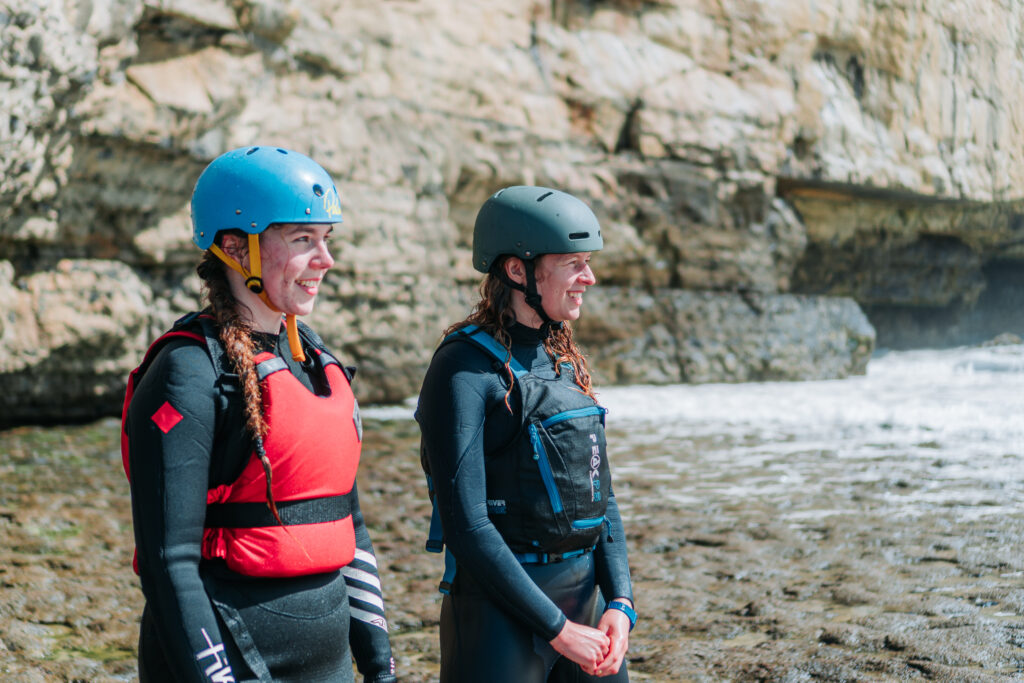
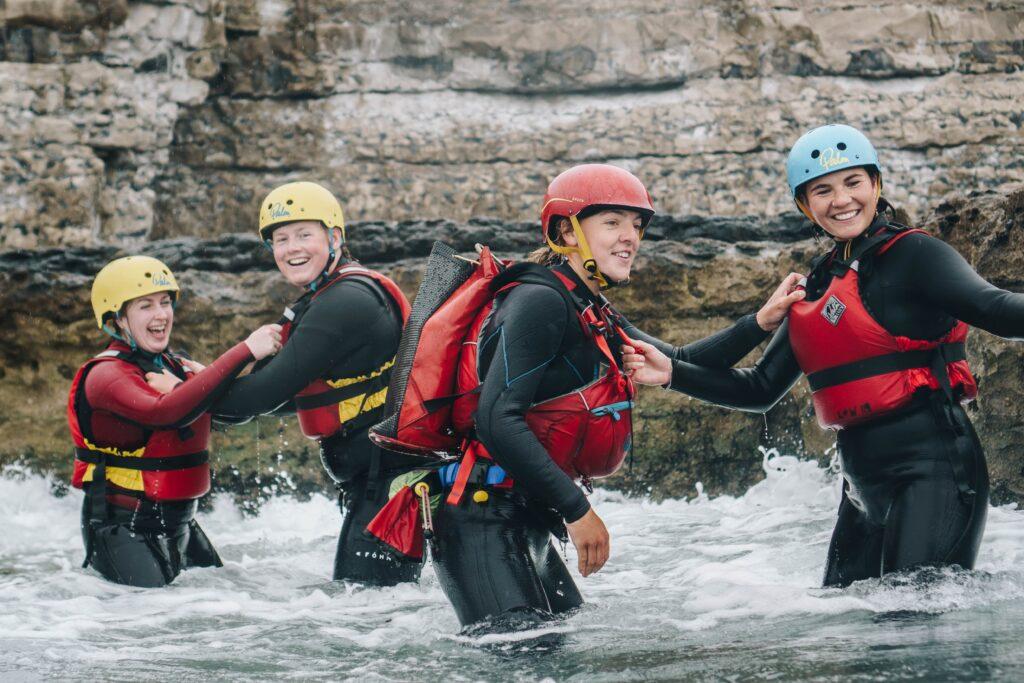
On any given week you might guide a group through coasteering on the Jurassic Coast, teach paddleboarding on a calm estuary, run a bushcraft session with a school group, or support young people on a Gold DofE residential.
The job needs real technical skill and the ability to work with people of all ages. You keep groups safe while making the experience genuinely enjoyable. Both matter equally.
How Long Does It Take to Qualify?
Gaining qualifications one at a time around a full-time job takes most people three to five years. The costs add up quickly when you book individual courses separately.
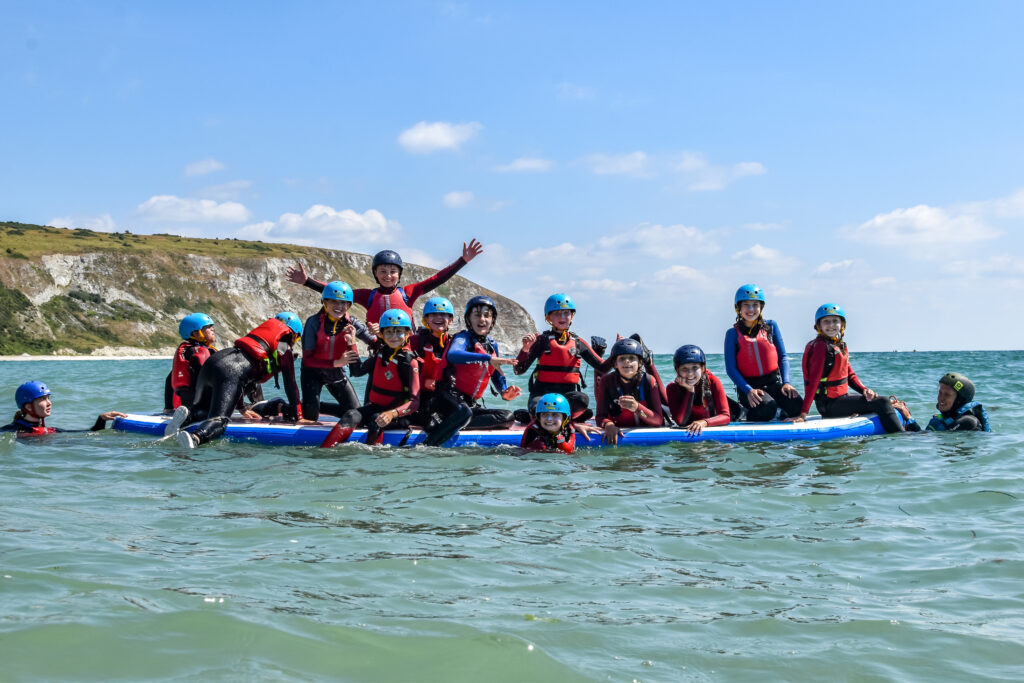
The faster option is a full-time instructor training programme, designed to give you a broad qualification portfolio in one focused block, usually 12 to 16 weeks.
Our Outdoor Instructor Training course at Land & Wave runs for 15 weeks from our base in Swanage on the Dorset coast. You graduate with 23 qualifications covering paddlesports, climbing, bushcraft, lifeguarding and first aid. Our job placement rate is 100%.
What Can You Earn as an Outdoor Instructor?
Starting pay is based on the National Minimum Wage:
- Age 18 to 20: £10.85 per hour (approx £22,500 per year full time)
- Age 21 and over: £12.71 per hour (approx £26,400 per year full time)
As you build experience and add qualifications, your pay moves above minimum wage. Senior instructors and activity managers typically earn between £28,000 and £38,000. Experienced freelance instructors can earn £200 to £350 per day.
Most people start on seasonal contracts and move into permanent roles over time. Some are taken on directly by the provider they trained with.
What Else Do Employers Look For?
Qualifications get you an interview. Everything else gets you the job.
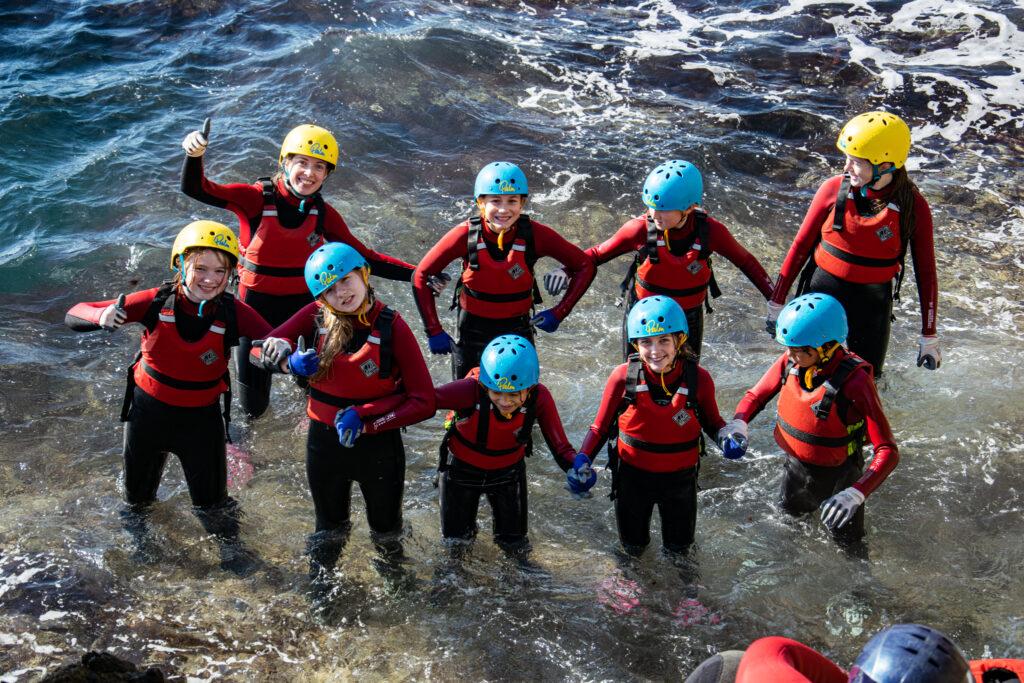
The best instructors are adaptable, patient and visibly enthusiastic about what they do. They can adjust a session plan when the weather turns, keep a nervous beginner relaxed, and manage a large group without making it feel like a risk assessment. Experience working with young people is a real advantage.
Is It a Good Career?
Yes, with honest expectations. Nobody becomes an outdoor instructor for the starting salary. You do it because a beach or a forest beats an office, and because watching someone do something they never thought possible is hard to put a price on.
The industry has grown up. Larger providers now offer permanent contracts, pension contributions and clear progression routes. Demand for qualified instructors continues to rise across schools, activity centres, holiday clubs and corporate clients.
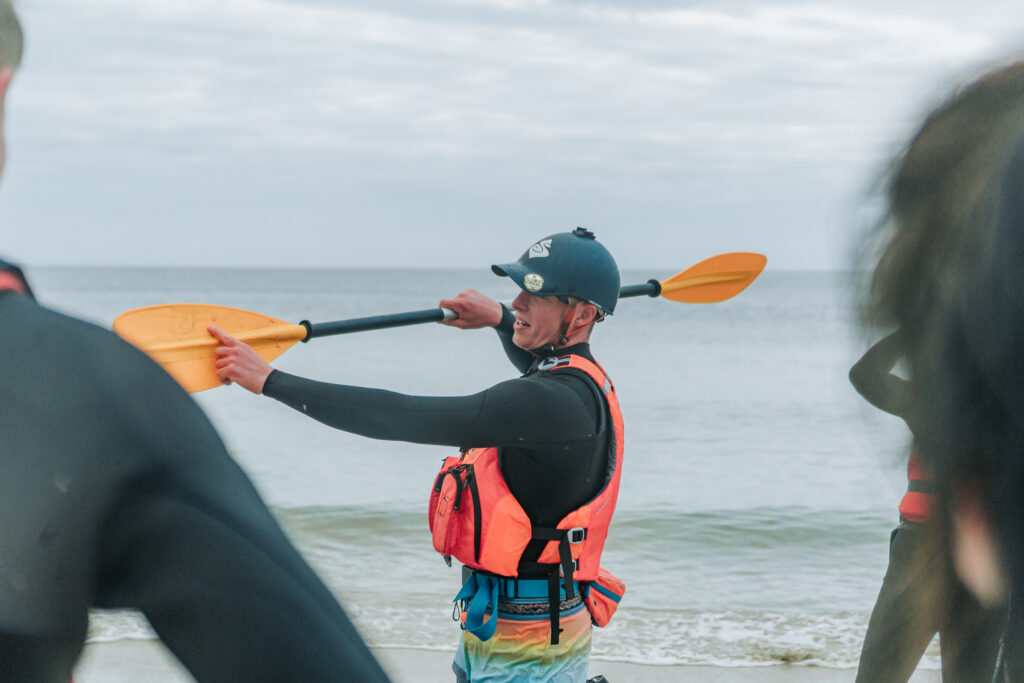
How to Become an Outdoor Instructor: Getting Started
Before spending money on qualifications, get some experience first. Volunteer with a Scout group, join a local kayak club, or help at a youth outdoor programme. Make sure the reality matches what you imagined.
Then choose your route:
- Build qualifications gradually alongside other work
- Commit to a full-time training programme and qualify quickly
If you want to be working as an instructor within a year, option two is the most direct path to how to become an outdoor instructor quickly and confidently. You arrive with enthusiasm. You leave with 23 qualifications, real experience and a job offer.
We run free open days at our Swanage base throughout the year. Come and meet the team, try the activities and ask us anything before you commit.
Find out more about our Outdoor Instructor Training course and book your free open day.
How long does it take to become a qualified outdoor instructor?
It depends on the route you take. Building qualifications one at a time around other work typically takes three to five years. A full-time intensive training programme like ours compresses that into 15 weeks. By the end you will have 23 qualifications and be ready to apply for jobs straight away.
Do I need a degree to become an outdoor instructor?
No. The outdoor industry is qualification-based rather than degree-based. What employers look for is a strong portfolio of National Governing Body awards, a current first aid certificate and proven experience working with groups. A degree in outdoor education or sports science can be useful but it is not a requirement for most instructor roles.
What is the best outdoor instructor qualification in the UK?
There is no single best qualification because the industry covers many different activities. The most in-demand awards tend to be Paddle UK paddlesport qualifications, Mountain Training awards for land-based activities, and RLSS lifeguard certificates for water safety. A Level 3 First Aid at Work qualification is essential regardless of your specialism. The more disciplines you are qualified in, the more employable you become.
Can I become an outdoor instructor at 18?
Yes. Many governing body qualifications are available from age 16 or 18. Our Outdoor Instructor Training course accepts applicants from age 18. Starting young is actually an advantage in this industry as you build experience and qualifications earlier than most.
What is the difference between an outdoor instructor and an outdoor education teacher?
An outdoor instructor delivers practical activity sessions, typically for leisure, holiday clubs, corporate events or youth groups. An outdoor education teacher works within the school curriculum, often in a teaching or pastoral role, and usually requires a teaching qualification such as a PGCE alongside their outdoor qualifications. Many outdoor instructors move into outdoor education teaching later in their careers.